

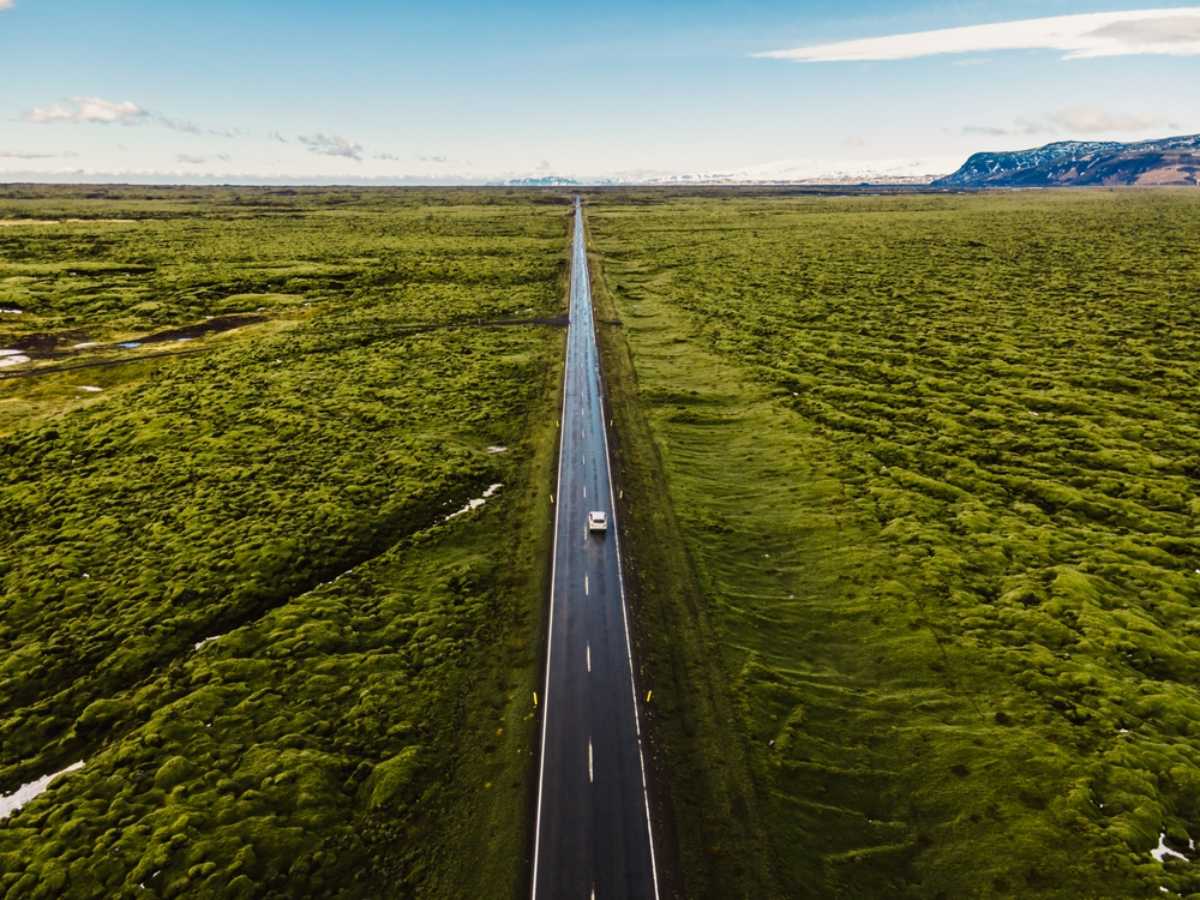




The Iceland Ring Road isn’t just a road trip. It’s Iceland, start to finish, from behind the wheel. One loop. One shot at seeing the country raw. Route 1 ties glaciers to lava fields, fjords to black beaches, and drops you right in the middle of it.
There are no dead ends on this route. Just the real thing. First time driving abroad? You’ll be fine. Especially if you rented from Cars Iceland. We know the road, the weather, and what catches tourists off guard.
This guide gives you the good stuff. Driving tips, real advice, and a 10-day route that actually works.
What Is the Ring Road in Iceland?
The Ring Road, officially called Route 1 in Iceland or Þjóðvegur 1, is the main highway that circles the country and connects nearly every region. It links Reykjavík to major towns like Akureyri, Vík, Höfn, and Egilsstaðir, passing through every kind of landscape Iceland has to offer.
The road was completed in 1974 and now serves as the spine of most self-drive itineraries. Cars Iceland renters choose Route 1 because it has all the highlights without touching a single F-road. The surface is paved end to end with asphalt, which means the route stays open year-round under normal conditions.
Most of the road has one lane in each direction, though around Reykjavík and the southwest, it widens to three or four lanes with passing zones. As of 2023, about 29 single-lane bridges remain (down from 140 in 1990), mostly in the east. These require drivers to yield as marked. A few single-lane tunnels also exist, but signage makes navigation simple. Upgrades continue, but the road is fully usable.
How Long Is the Ring Road?
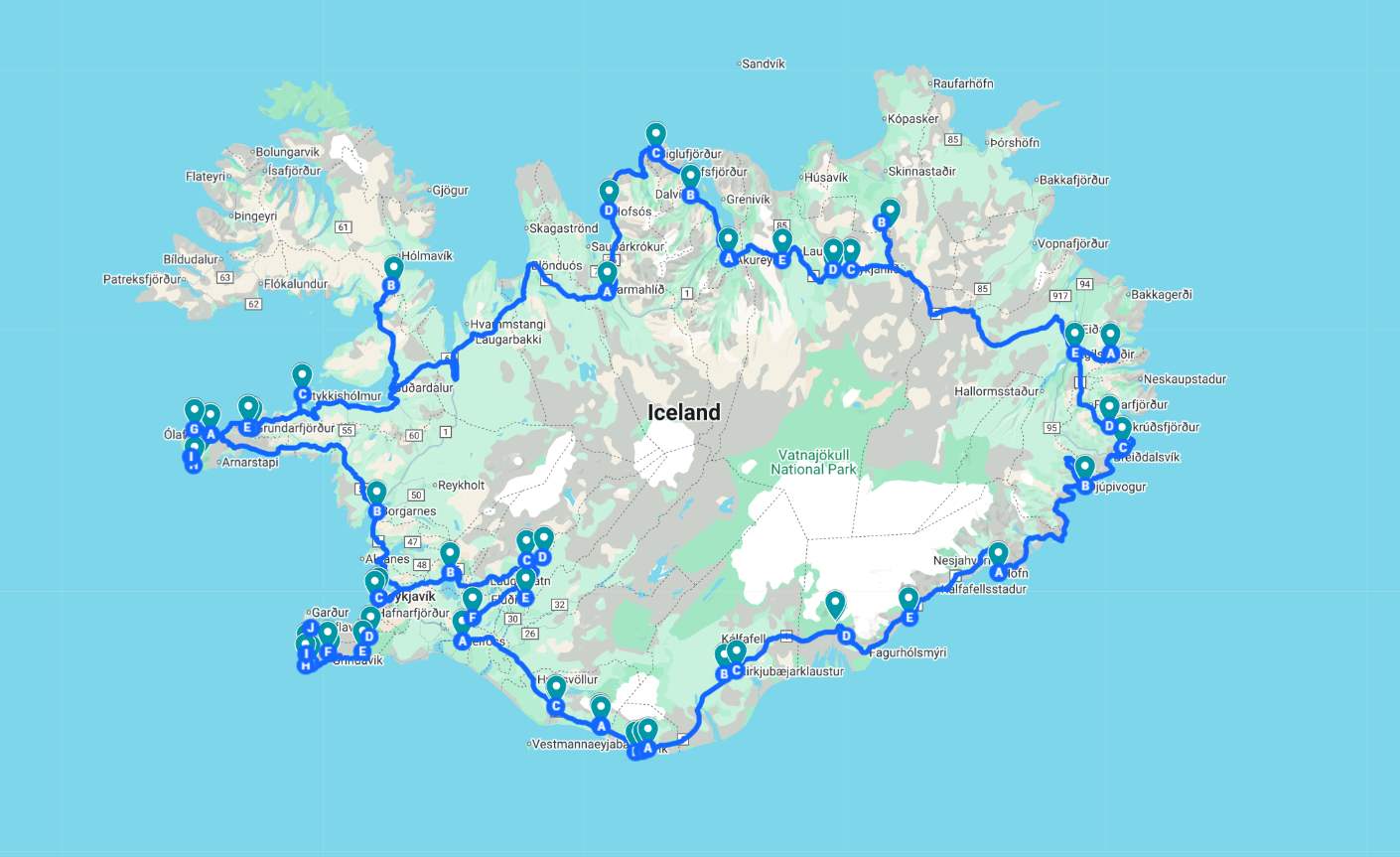
The short answer to how long the ring road in Iceland is, well, it is 1,322 km or about 821 mi. That is the official Iceland Ring Road length if you drive it clean, without detours, and without curiosity. Almost nobody does that. Add Snæfellsnes, the Eastfjords, coastal loops, or scenic shortcuts, and you are easily looking at another 200 to 300 km, roughly 125 to 185 mi.
This is where most people misjudge the trip. The distance itself is manageable. The time is not. Since the roads are narrow, the speed limits are low as well. Weather slows everything down too. So do photo stops, sheep, construction, and places you did not plan to stop at but will anyway.
This is why Cars Iceland customers rarely talk about kilometers after the trip. They talk about days. Iceland rewards stopping, not rushing. If you treat the Ring Road like a checklist, it will feel long. If you treat it like a journey, the distance stops mattering at all.
How Long Does It Take to Drive the Ring Road?
How long is Iceland’s Ring Road to drive? If you stick to the loop with no major detours, most travelers complete it in 7 to 14 days. Seven days works for tight schedules, but expect 4 to 6 hours of driving per day and limited time to explore. Ten days is the sweet spot.
Enough time to breathe between stops without falling behind. Fourteen days or more is best if you want to explore the Eastfjords, avoid burnout, and stop without checking the time.
How much does it cost to drive the Ring Road?
The total cost of driving Iceland’s Ring Road depends on your travel style, but for most people, it’s more affordable than expected, especially with a rental car in Iceland.
On average, budget travelers might spend $120-$180 per day, while mid-range trips land around $180-$250 per day per person. This, of course, included vehicle rental, fuel, campsites, and food, so not bad for a country like Iceland, right?
So, what’s the best direction to drive it: clockwise or counterclockwise?
This is probably one of the most common Ring Road questions we get asked. The short answer? Counterclockwise is the most popular option, especially for first-timers. The reason behind it is when you drive counterclockwise, you put the South Coast early in your trip, where Iceland’s most famous highlights are located.
You can then spend more time there, taking them in properly before heading out to more spare areas that, if you don’t have much time, you can simply rush through. That being said, clockwise can be a smart move in peak summer and if you have plenty of time. It spreads out sightseeing differently and can help you avoid tour bus traffic.
Is the Ring Road suitable for families and kids?
Of course it is! The Ring Road is actually very family-friendly, even with young children and toddlers. Roads are well maintained, distances between stops are manageable, and there are plenty of kid-approved highlights like waterfalls, hot springs, horse riding, and exotic black sand beaches.
Traveling with your own rental car actually makes things easier for families since you can control breaks, meals, and stops without stress.
Do You Need a 4x4 to Drive the Ring Road?
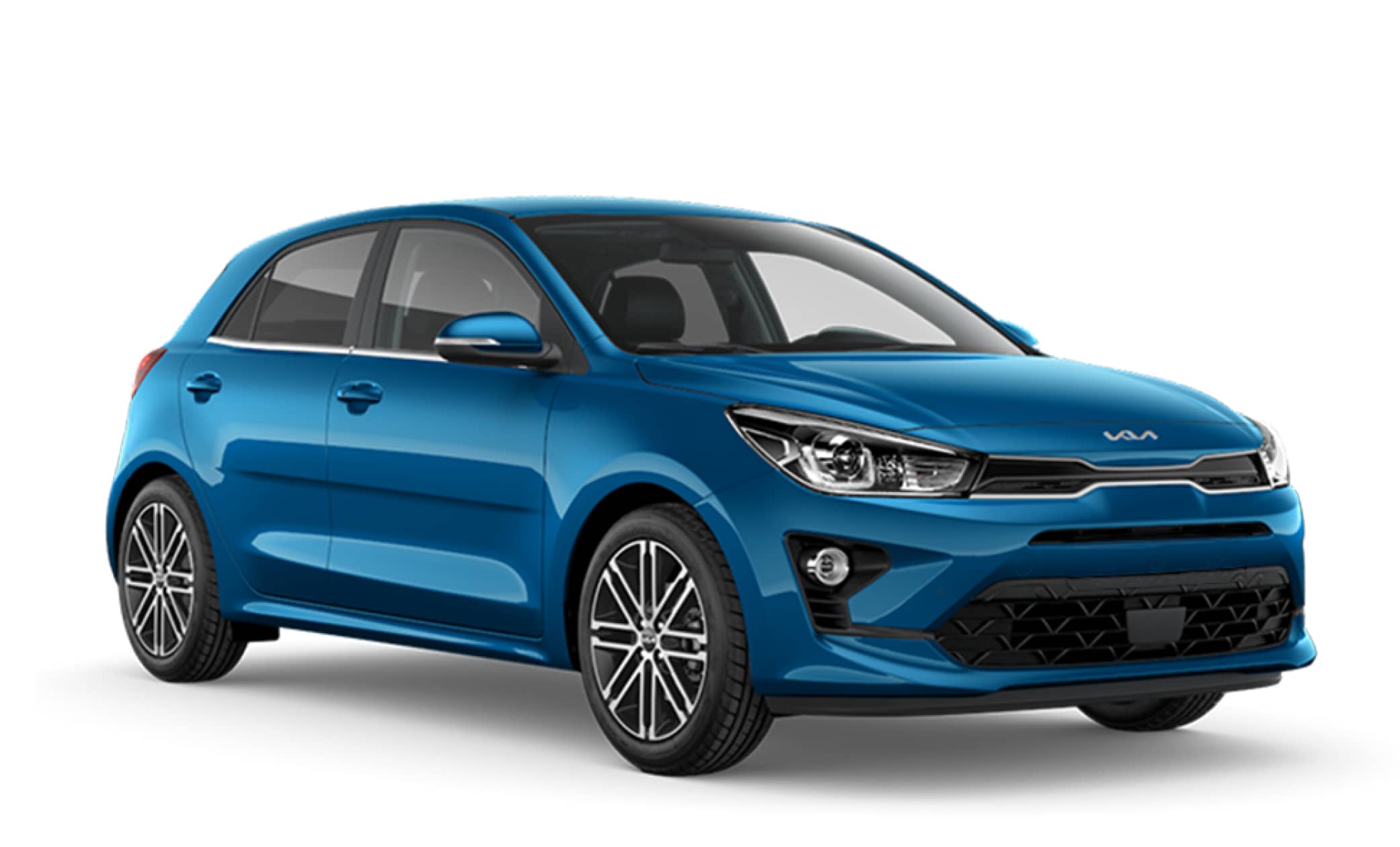
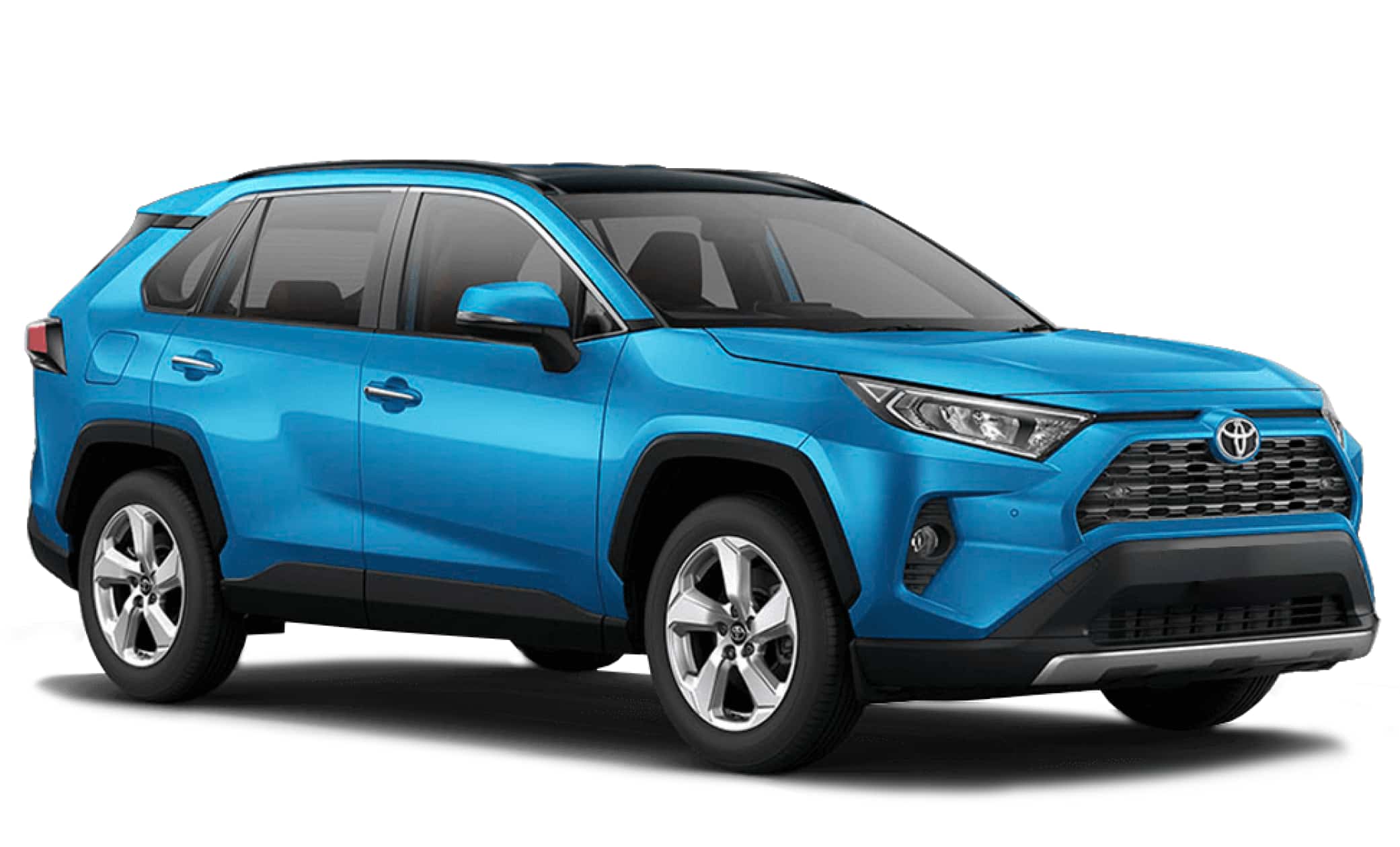
If you plan to rent a car in Iceland and stick to Route 1 in summer, a 2WD will do the job. At Cars Iceland, we keep our fleet properly maintained for every season, and our two-wheel drives handle the Ring Road just fine from late spring through early autumn. But in winter or during the shoulder months, we recommend a 4x4.
Not because it looks good, but because it keeps you on the road when conditions turn. Some detours, like Þórsmörk or Landmannalaugar are F-roads and legally require a 4x4. These are off-limits for 2WDs, full stop. Gravel damage is common in the south and east.
Our Zero Excess and Premium car insurance packages include gravel, sand, and ash protection. If you want full coverage and zero headaches, get one of those. We don’t upsell cars or insurance you don’t need. Ask us what fits your route. We’ll give it to you straight.
Is the Ring Road Open All Year Round?
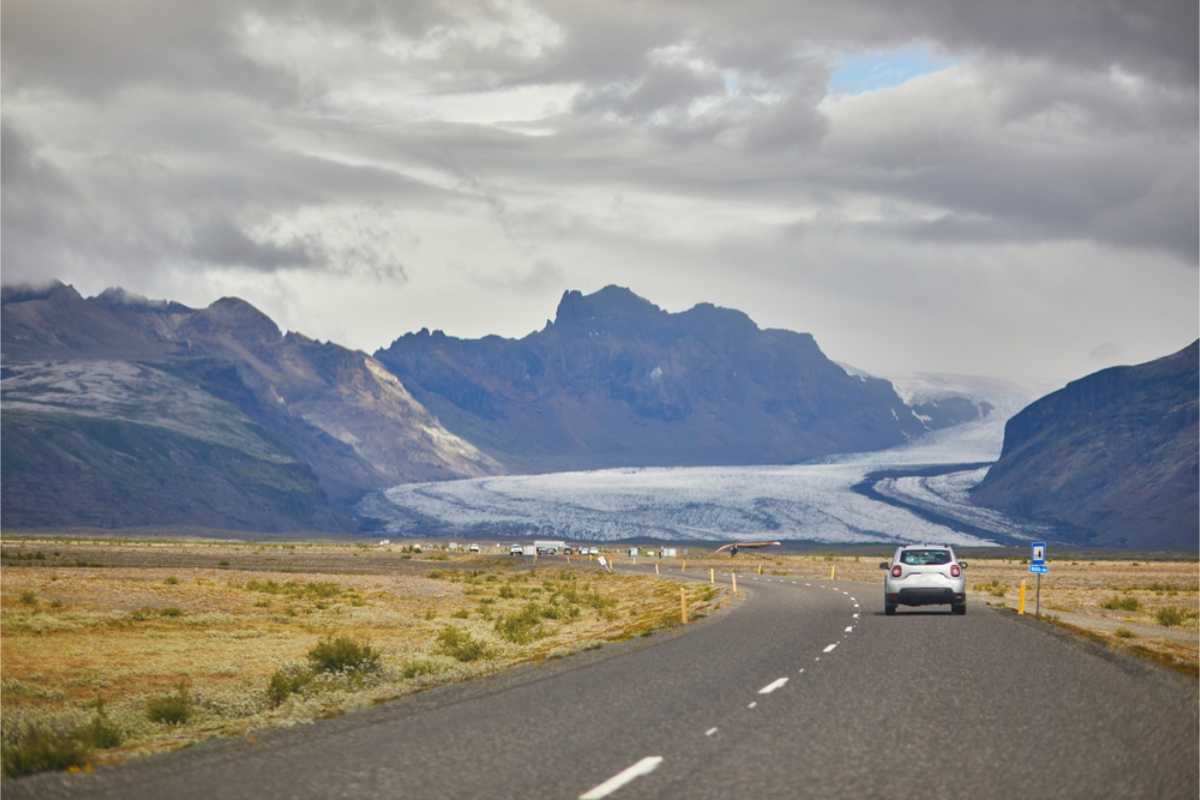
Is Iceland’s Ring Road open all year round? Technically, yes. But in practice, no. While Route 1 is fully paved and maintained, weather controls everything. Snow, ice, and high winds often shut down parts of the road, especially in East Iceland and near mountain passes. These closures can last for hours or, in bad conditions, most of the day.
Before you drive, check www.umferdin.is. It shows live road conditions, wind speeds, and closures in real time. We recommend checking it every single morning, no matter how clear the sky looks. If your planned route is closed mid-trip, stop.
Do not attempt detours unless the road is confirmed open. Find a nearby town, wait it out, and check for updates. Most sections reopen within a day. The worst choice you can make in Iceland is rushing into bad weather thinking it will clear. It usually does. Just not when you want it to.
Best Time to Drive the Ring Road in Iceland
Timing your Ring Road trip is more important than most people realize. The month you choose affects not just road safety, but how far you’ll get each day, what’s open, how much daylight you’ll have, and what kind of gear your rental car needs.
Most folks pick dates based on bucket list items like northern lights or midnight sun but forget to factor in road closures and fuel station hours. This section breaks it down by season so you can plan for the road, not just the photos.
Each has tradeoffs. None are perfect. Use it to decide what you can handle, what matters most, and whether you’re choosing the right time for the kind of trip you actually want.
Summer
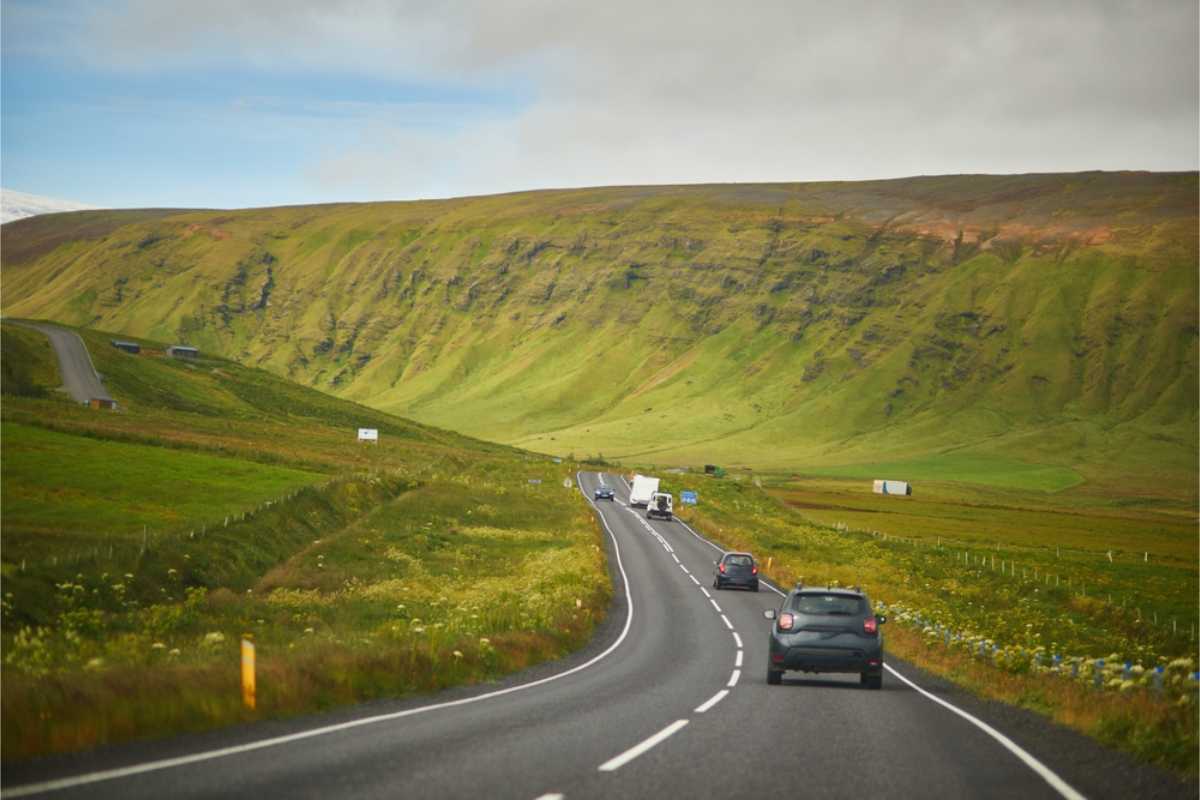
Summer is the easiest time to complete Iceland’s loop. Daylight stretches up to 21 hours in June and July, giving you longer driving windows and more time at each stop. Campsites are fully open, trails are clear, and the Ring Road is at its most accessible.
Puffins gather along the coast, and national parks are fully staffed. The circuit stays free of snow, with minimal closures or delays. A 2WD is usually enough unless you're adding detours or F-roads.
The flip side? Crowds. Hotels fill fast, and parking near popular sites gets competitive. Book early. Traffic is busiest near Reykjavík and on the South Coast. East and North Iceland remain quieter.
If you're planning to rent a car in summer, we at Cars Iceland recommend booking 6 to 8 weeks in advance. Demand spikes fast, especially for 4x4s.
Winter
Winter on Iceland’s highway is unpredictable and demanding. Daylight drops to 4 to 7 hours between November and February, which limits safe driving to midday. Snow, ice, and strong winds hit hardest in the north and east, often closing sections of the Ring Road with little warning. Plan flexible 10 to 14 day trips with buffer time built in. Delays are normal.
Cars Iceland equips every vehicle with winter tires from November through April at no extra cost to you. For added control, we strongly recommend renting a 4x4. It makes a real difference on icy stretches and single-lane bridges.
Avoid driving after dark. Black ice is common, and recovery services can take hours to reach remote areas. While fewer tourists mean quieter geothermal stops and better hotel prices, safety must come first. Keep your fuel tank above half and check Umferdin.is daily.
Spring and Autumn
Spring and autumn bring mixed conditions to Iceland’s Route 1. In April and May, and again in September and October, daylight ranges from 13 to 18 hours. These months offer fewer crowds and decent accessibility, but the weather shifts often. Rain, wind, and leftover snow can still affect your route, especially in the north, east, and highland approaches.
Most major sections of the Ring Road stay open, but you should check Umferdin.is every morning for updates. Cars Iceland rentals come with winter tires until mid-April. For better grip and flexibility in changing conditions, a 4x4 is recommended.
Spring offers lambing season and roaring waterfalls. Autumn brings clear skies for northern lights and bursts of fall color. Photographers, solo travelers, and anyone who prefers slower travel often choose these months. May and September are especially popular with Cars Iceland renters for their balance of daylight, price, and availability without full summer chaos.
Driving Conditions and Safety on the Ring Road
Iceland’s Route 1 looks manageable on a map since it is paved, marked, and technically a highway. But that does not mean it behaves like one. The risks are real, especially if you treat it like a normal road. Even experienced drivers get caught off guard.
At Cars Iceland, we make sure renters know what they are getting into before they drive off. That includes road condition resources, safety briefings, and route checks based on the season. You will not get that from a booking engine. Let’s take a closer look at some must-knows:
Speed Limits and Rules
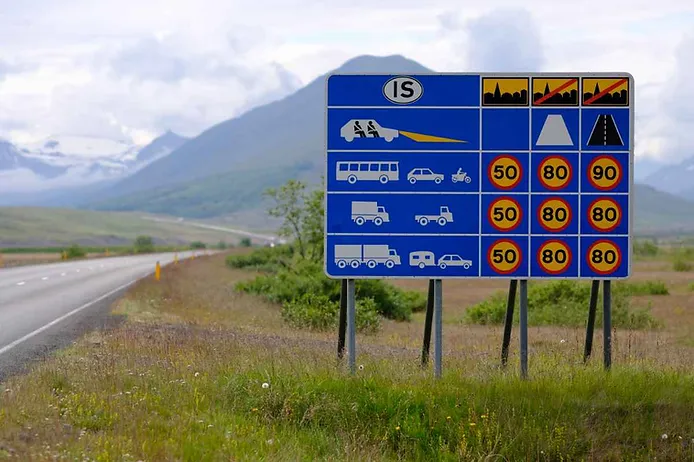
Here’s what you need to know about Iceland’s speed limit. Don’t make assumptions. Follow these rules or pay the price.
- 90 km/h (56 mph) max on open roads. This is the general limit, but you may see lower limits depending on the terrain.
- 50 km/h (31 mph) in towns. This is non-negotiable. Drive slower when approaching built-up areas.
- 30 km/h (19 mph) in residential zones. If you’re going faster, you’ll see flashing lights in your rearview mirror.
- Headlights always on. Day, night, or weather – keep them on at all times.
- Seatbelts are mandatory for everyone in the car, not just the driver.
Police patrol actively. Cameras are common, and fines are steep. Minor exceedances can cost around 15,000 ISK ($145 USD). Exceeding by more than 30 km/h (19 mph) can result in fines up to 150,000 ISK ($1,070 USD). Don’t test the limits.
Weather, Wind, Closures
As you already know by now, Iceland’s weather can turn on a dime. If you’re not prepared, it can stop you dead in your tracks. Here's what you need to watch for:
- Wind over 20 m/s (72 km/h or 45 mph)? Stay put. It’s not safe to drive.
- Black ice forms without warning. It’s most common in the morning and evening, so keep your speed low and watch for slick patches.
- Visibility drops fast, especially in fog or snow. If you can’t see, don’t drive.
- Drifting snow can quickly cover roads and block your route.
- Road closures are frequent in winter, especially in the north and east. Always check Umferdin.is for updates before you leave.
Cars Iceland offers 24/7 emergency support for all our clients. If you find yourself in trouble or unsure about road conditions, we’re here to help
Fuel and Distance Gaps
Fuel stations along Iceland’s Ring Road are generally spaced every 50-100 km (31-62 miles), but there are longer gaps of 200-243 km (124-151 miles) in more remote areas like the east and north.
- Station Network: Major chains like N1 and Orkan operate 24/7 self-service pumps. They require credit cards with PINs for payment. Many stations also have cafés and grocery stores, making them ideal stops for campervan rentals.
- Fuel Costs: As of 2025, expect to pay around 320 ISK ($2.50 USD) per liter for gasoline and 300 ISK ($2.30 USD) for diesel. Prices rise in remote areas.
- Fuel Strategy: We recommend topping up when you hit half a tank. Remote stretches, particularly between Vík and Mývatn, lack fueling options.
- Planning: Use Google Maps or Vegagerdin.is to locate stations and track real-time availability. Fuel cards and apps are essential. Our customers often underestimate the lack of shops or bathrooms in rural zones, so always plan ahead.
What offline apps should I use for the Ring Road?
Safety always comes first. Cell service is quite decent along the Ring Road, but you’ll still want offline backups and updated information at hand. Here are a few must-haves:
- Google maps (offline download) for navigation
- Vedur.is for weather forecasts
- Umferdin.is for live road conditions
- 112 Iceland App in case of emergency
- Aurora forecast app if traveling during the winter

10-Day Self-Drive Ring Road Itinerary
This 10-day itinerary is designed to give you enough time to breathe, stop when you want to, and actually experience Iceland’s raw beauty. You’ll be driving through everything from volcanoes to glaciers, chasing waterfalls and the northern lights, all while avoiding the typical tourist traps and rookie mistakes. We’ll also do it clockwise, which is a different way of sightseeing Iceland.
Day 1: Arrival + Reykjavík
After landing at Keflavík International Airport, pick up your vehicle from Cars Iceland. Everything is prepped and waiting, so there is no need to waste time figuring things out at the counter. From there, it is a short drive to the start of your trip.
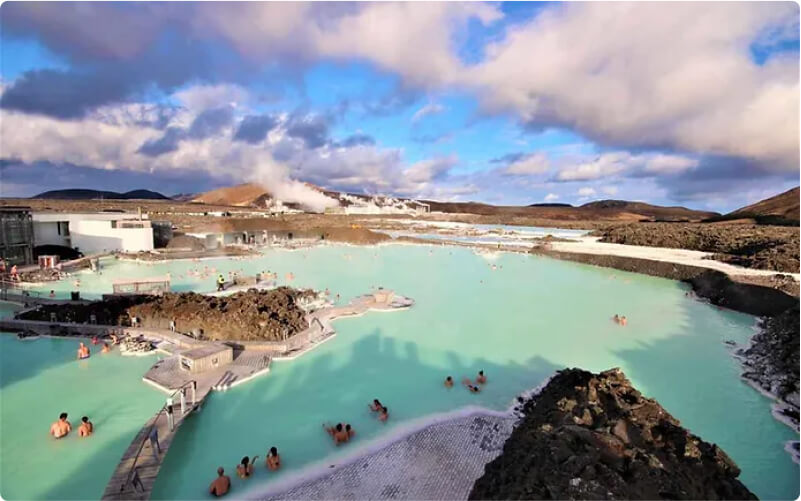
Drive time today is about 1 hour, covering 49 km (30 miles). You have two options. Head straight to Reykjavík and settle in, or make a stop at the Blue Lagoon for a warm soak. It is close to the airport and best done now, not later.
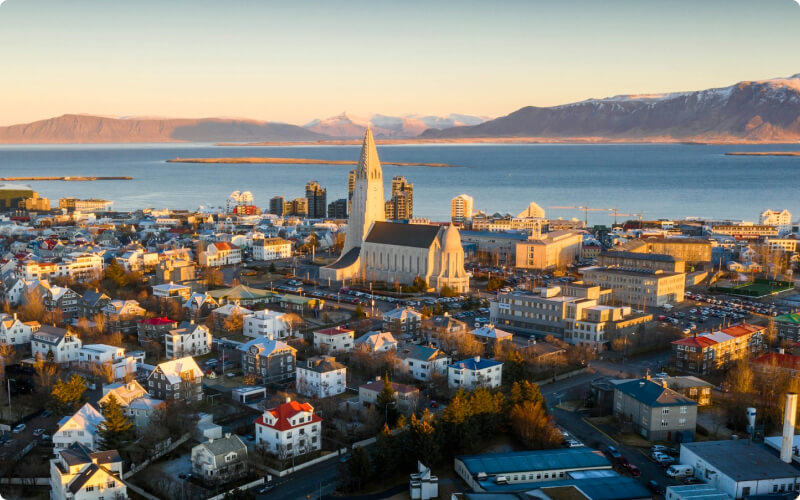
Once in the city, take it slow. Reykjavík has amazing food, good coffee, and enough sights to keep you busy without wearing you out. Hallgrímskirkja, Harpa Concert Hall, and the old harbor are all within walking distance. Sleep near the city or stay closer to the airport if you have a morning departure planned. You will need the rest.
Day 2: Snæfellsnes Detour
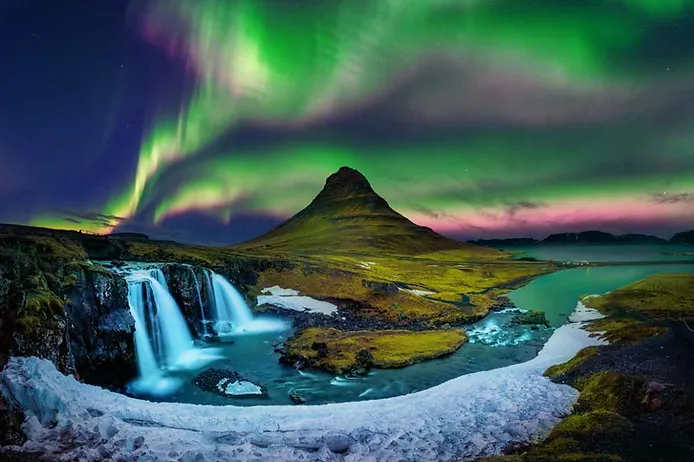
Leave Reykjavík early and head northwest toward the Snæfellsnes Peninsula. This is a full day with roughly 4 hours of drive time and a total of 300 km (186 miles). You are off Iceland's Ring Road for now, but it is worth it. This region is often called a condensed version of the country, with fewer crowds and stronger contrasts.
Photograph Kirkjufell Mountain from the roadside. It is one of the most photographed spots in Iceland for a reason. Walk through the Londrangar lava field and visit the Arnarstapi settlement for ocean views and strange basalt formations.
If you have the time and conditions allow, explore the Vatnshellir lava cave with a local guide. For more active travelers, the Glymur waterfall hike is also an option, though it can take a few hours roundtrip.
End your day near Arnarstapi or Hellnar. These small villages offer quiet stays and access to coastal paths that are best seen in the evening light.
Day 3: Northbound to Akureyri
Today is a longer driving day. Expect around 6.5 hours behind the wheel, covering roughly 480 km or 298 miles. The scenery is strong from the start, with wide plains, distant mountains, and long empty stretches. This part of the trip feels quieter, and that is part of the appeal.
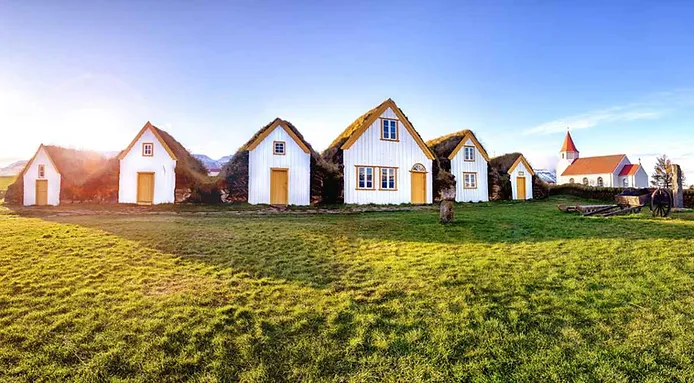
If you want to break up the drive, consider two solid detours. Hvítserkur is a rock formation off the coast that looks sharp from most angles.Glaumbaer offers well-preserved turf houses that give you a look at how Icelanders lived for centuries. Both are close to the Ring Road and easy to add without throwing off your timing.
Akureyri is your stop for the night. It is the largest town in the north with actual restaurants, shops, and a public swimming pool worth checking out. If your accommodation has a hot tub, use it. You have earned it.
Day 4: Goðafoss + Húsavík
Today is a lighter drive, with just 2 hours on the road and around 140 km or 87 miles in total. You are still following Iceland’s loop but now shifting toward one of its most scenic and slower-paced regions.
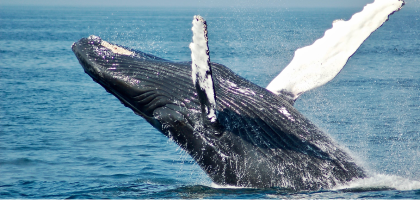
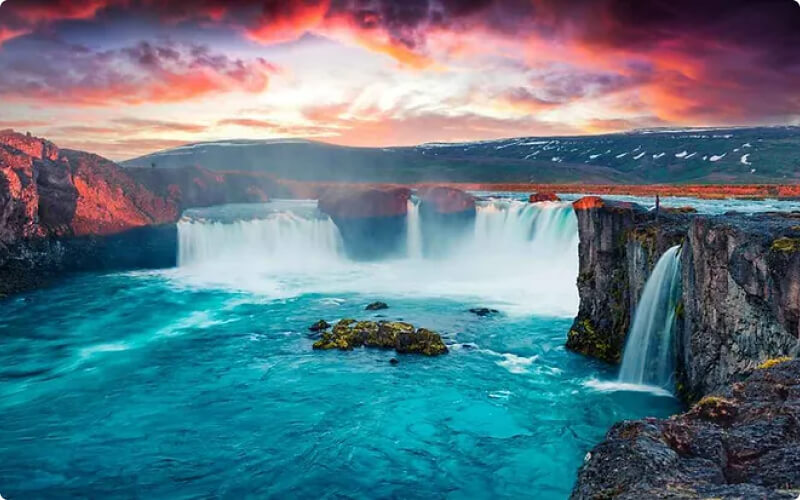
First stop is Goðafoss, one of the most striking waterfalls in the north. It is close to the Ring Road and does not take long to reach, but it is worth spending time here. From there, head north to Húsavík. This small town is known for whale watching, and boat tours here have some of the highest sighting rates in Iceland. If the sea is calm, book it.
Back on land, the geothermal sea baths above the town offer fantastic views and fewer people than other spots. End the day by heading to Mývatn for the night. Roads in this area are slower, so give yourself time to reach your stay before dark.
Day 5: Mývatn + Dettifoss
This day packs in some of the most unusual terrain along the route. Drive time totals about 3.5 hours with 225 km or 140 miles in all. You will stay in Mývatn again tonight, so there is no need to rush.
Start early and head toward Dettifoss. It is one of the most powerful waterfalls in Europe. Nearby Selfoss is also worth the short walk upriver. The roads out here are rougher, and depending on the season, may be gravel or partially closed. Check Umferdin.is before leaving.
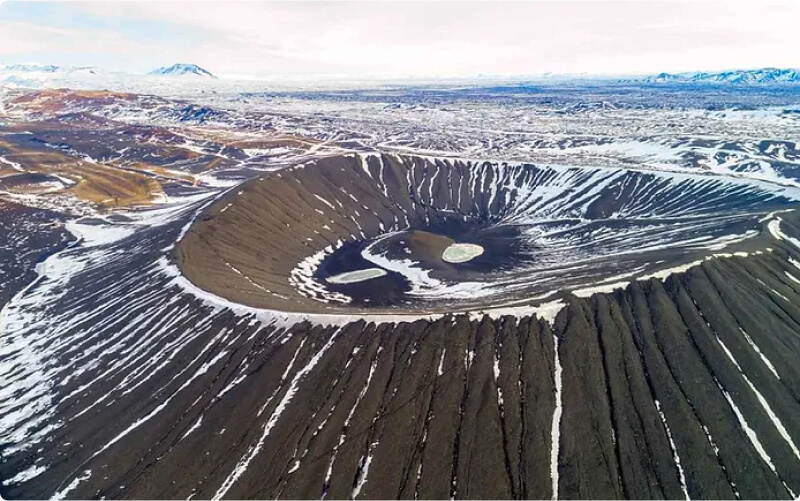
Back in the Mývatn area, spend the rest of your day exploring. Dimmuborgir has twisted lava formations and marked trails. Hverfjall Crater offers a short but steep hike with wide views. Grjótagjá is a small cave with geothermal water. It was used as a filming location in Game of Thrones during a scene with Jon Snow and Ygritte. End the day at the Mývatn Nature Baths to warm up and unwind.
Day 6: East Fjords
Expect a quieter stretch today with a total drive time of about 4.8 hours, covering 350 km or 217 miles. This part of the route is less developed and slower, with coastal roads that curve through small fishing villages and narrow fjords.
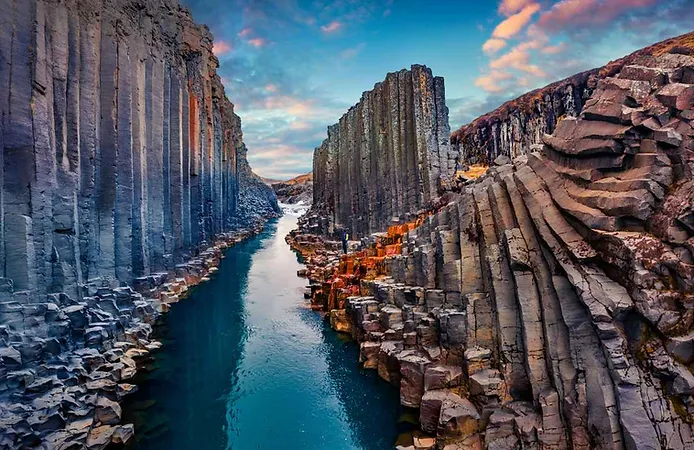
Make your way southeast toward Höfn, with a few key stops along the way. Start at Stuðlagil Canyon. It has columnar basalt cliffs and turquoise water if the river is low. Access is easier from the east side, but check recent conditions before committing to the longer hike.
Next is Rjúkandi Waterfall, an easy roadside stop with a short trail for better views. If you are traveling from May to August, consider a detour to Borgarfjörður to see puffins up close during the breeding season.
Accommodation options increase as you near Höfn. This town marks the transition from remote fjords to the glacier zones of the southeast. Rest here. The next day starts early.
Day 7: Vatnajökull + Jökulsárlón
Today covers a short section of Iceland’s highway with around 2 hours of driving and 140 km or 87 miles in total. This stretch is packed with major highlights, so keep your schedule loose and start early.
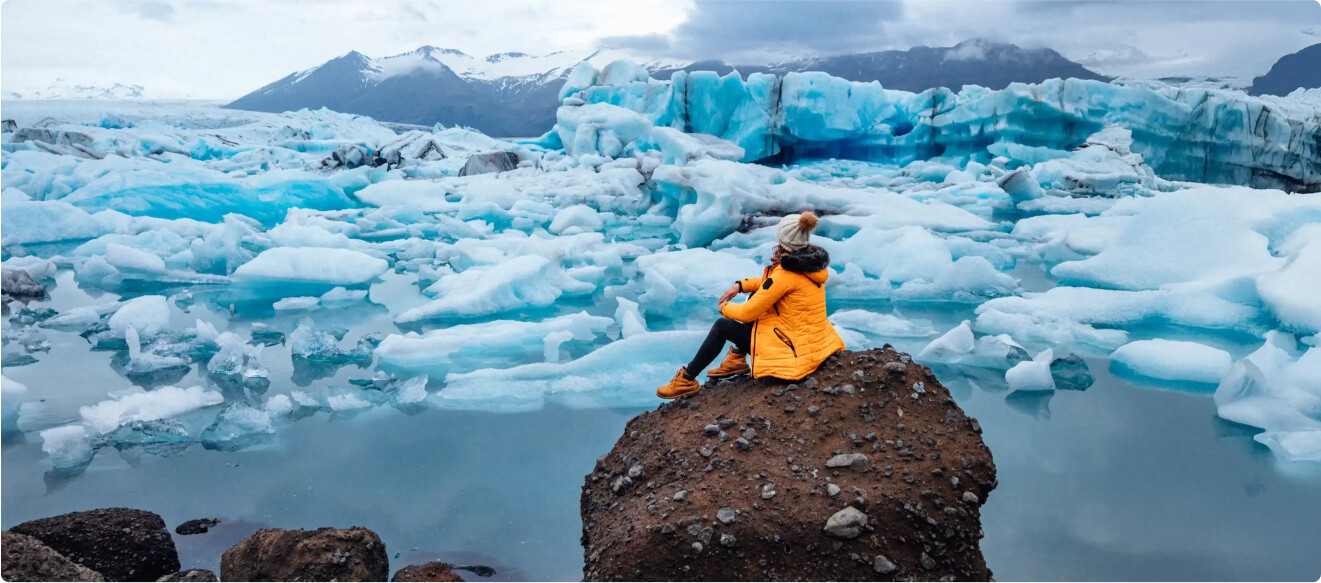
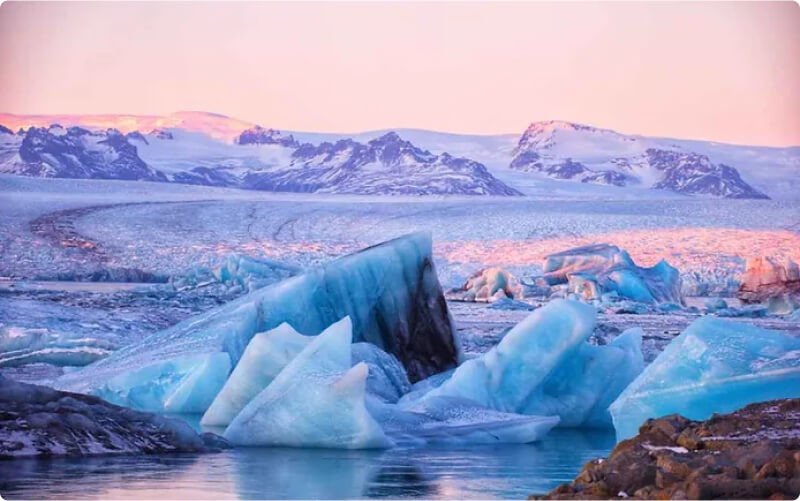
Begin at Jökulsárlón Glacier Lagoon. Boat tours operate from spring to autumn and offer close views of icebergs drifting from Breiðamerkurjökull, one of Vatnajökull’s outlet glaciers. Just across the road is Diamond Beach, where broken ice washes onto the black sand.
Nearby Fjallsárlón is smaller but usually less crowded. It offers similar glacier views without the tour buses. Skaftafell is your final stop. Trails range from easy walks to more demanding glacier hikes.
Svartifoss is a popular route, known for the basalt-column backdrop. If you plan to hike on the glacier itself, book a guided tour in advance for safety. Stay overnight in Skaftafell or nearby. Tomorrow you return to the South Coast.
Day 8: South Coast Sights
This section of the trip brings you back toward busier parts of the island. Expect around 3.5 hours of driving, with a total distance of 285 km or 177 miles. The stops today are closer together but require early starts to avoid peak traffic.
Begin at Fjaðrárgljúfur Canyon, a narrow green gorge with well-maintained walking paths and viewing platforms. Continue west to Reynisfjara Beach for basalt columns and strong waves. Dyrhólaey Lighthouse is nearby and offers a clear view of the coastline.
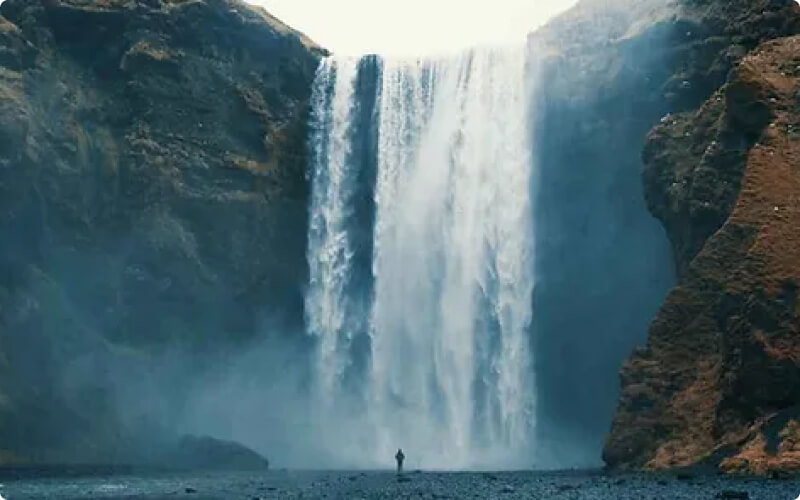
Skógafoss is the next stop. You can walk right up to the base or hike the steps to the top. Kvernufoss and Gljúfrabúi are less crowded options nearby, each requiring a short walk from the road.
Wrap up the day by heading inland to Flúðir. It places you closer to tomorrow’s Golden Circle route and gives you the option to visit the local Secret Lagoon hot spring in the evening.
Day 9: Golden Circle
Drive time today is about 2 hours, covering 125 km or 78 miles in total. This is the Golden Circle, Iceland’s most visited route. It is a shorter day, but the sites can still get crowded if you arrive late.
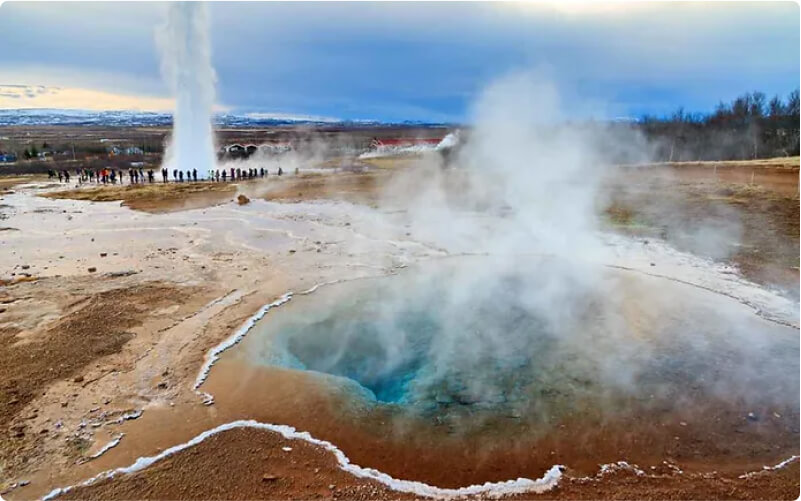
Start with Gullfoss, a wide, two-tiered waterfall with strong flow year-round. There are multiple platforms with views from different angles. From there, head to the Geysir Geothermal Area. Strokkur is the active geyser here and erupts every few minutes. The surrounding area has hot springs, steam vents, and walking paths.
End the day at Thingvellir National Park, where the North American and Eurasian tectonic plates meet. It is also the historic site of Iceland’s first parliament. Trails here vary in length and difficulty.
You can return to Reykjavík in the late afternoon or stay nearby if you prefer a quiet evening. Either way, this is your last full day on the road.
Day 10: Departure
Your final drive is short, just 49 km or about 30 miles back to Keflavík Airport. Expect around 1 hour on the road, depending on traffic. Use the morning to walk through anything you missed in Reykjavík on Day 1. Grab a coffee, visit Hallgrímskirkja, or stop by a local bakery for the flight.
If you still need souvenirs, downtown shops open early. Give yourself plenty of time to get to the airport. Car return with Cars Iceland is fast and straightforward. No surprises and no delays. You will get a final check, and then you are on your way.
Most people finishing the ring road in Iceland wish they had added more time. More days off the highway. More nights in fewer places. Keep that in mind if you ever return. For now, you have completed the loop. Everything else can wait until next time.
Can You Drive the Ring Road in Winter?
Yes, you can drive the Ring Road in winter if you know what you are doing. It is fully possible, but not for everyone. If you are a nervous driver or have no experience with snow and ice, skip it. There is no shame in taking a guided tour or flying between towns.
Where to Stay on the Ring Road
Accommodation along the Ring Road ranges from farm stays and cabins to guesthouses and hotels. All are great options, depending on your budget and how much space you want. During the high season from May to September, booking in advance is a must.
Availability drops fast, especially in smaller towns and remote areas like the East Fjords. Do not expect to find last-minute rooms unless you are very flexible. If you plan to camp, double-check that your rental allows it. Cars Iceland offers vehicles that are fully cleared for campsite use. Wild camping is not allowed, so stick to designated areas.
Ring Road FAQs for Rental Car Drivers
Do I need to pay tolls?
Only one toll exists on the Ring Road, the Vaðlaheiðargöng tunnel near Akureyri. Cars Iceland will explain how to pay it when you collect your vehicle.
Can I sleep in the car?
Sleeping in your car is only legal at registered campsites. Wild camping is prohibited. Cars Iceland rentals are campsite-approved if you book the right vehicle category.
Best apps to download?
Use Vedur.is for weather, Safetravel.is for alerts, Parka.is for parking in towns, and N1 for locating fuel stations. All are free and reliable for road travel.
Do I need insurance?
Basic cover is included: CDW, TPL, PAI, and Theft Protection. For gravel, sand, and ash damage, upgrade to our Zero Excess or Premium bundle for full peace of mind.
Is the Iceland Ring Road Worth It?
Is Iceland’s Ring Road worth it? If you are after clubs, spas, or shopping, skip it. But if you want storms, silence, glaciers, and raw scenery, this is your route. It is long, often slow, sometimes expensive, and completely worth the effort.
The full loop gives you more than most trips ever will. Rent from Cars Iceland and you get real support before, during, and after. That matters when the weather turns or plans change. If sheep traffic, gravel, or wind make you nervous, just buy a postcard and stay home.