

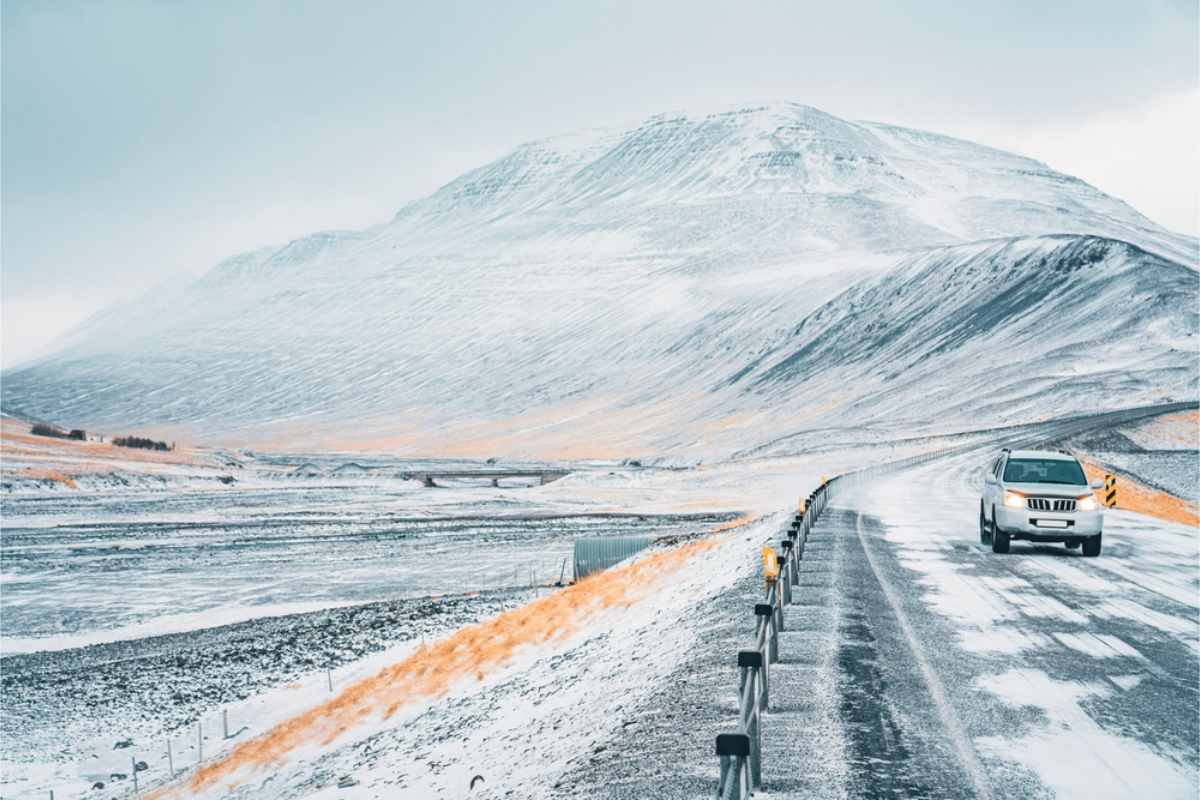


Driving in Iceland in January is no joke. Roads vanish in whiteouts. Wind shoves your car sideways. Sunlight clocks in late and leaves early. But it’s also when the country feels wild again. Frozen beaches. Fewer tourists. Silence.
This guide covers everything you need to know about driving in Iceland in January, from road conditions and rental tips to routes that are still open when others shut down. At Cars Iceland, we rent all year because people don’t stop exploring when it snows.
They just get smarter about it. For more than driving, check our complete guide to Iceland in January.
What It’s Like to Drive in Iceland in January
Driving in Iceland in January comes with its own rhythm. Here’s what you need to know about the weather, daylight hours, and how they shape every route you take.
Typical Weather Conditions and Challenges
Driving in Iceland in January means dealing with some of the most unpredictable conditions of the year. Snowfall is frequent. Ice forms fast. Freeze-thaw cycles turn roads into slick messes, especially in the south and east.
Sudden gusts can reach 100 km/h (62 mph) and push your car sideways on exposed routes like the North Coast. And the forecast? Mostly useless after a few hours. A blue-sky morning can collapse into a whiteout before lunch, with visibility dropping under 100 meters (328 feet).
If you're wondering how this compares to other months, this month-by-month breakdown of Iceland’s weather shows just how wild January gets. We see it every year. That's why our team always advises shorter daily routes, generous time buffers, and checking conditions before every drive.
How Many Hours of Daylight Can You Expect?
January daylight in Iceland is short. Early in the month, you get around 4 hours. By the end, it stretches to 7. In Reykjavík, sunrise begins around 11:00, and sunset wraps up by 15:30.
In the north, it can drop to just 3.5 hours. Driving during daylight is safer, simpler, and far less stressful. Visibility is better. You can actually see the ice you're trying to avoid. At Cars Iceland, we recommend hitting the road around 10:00 and wrapping up by 15:00.
That gives you a margin before darkness sets in and lets you avoid the riskiest hours on the road.
How Winter Weather Affects Driving
Winter driving in Iceland slows everything down. Even on the Ring Road, most drivers average 50 to 70 km/h (31 to 43 mph) instead of the usual 90 km/h (56 mph). Visibility drops fast in snowfall, sometimes below 50 meters (164 feet), especially on exposed routes like the Golden Circle.
Black ice builds up near bridges and in shaded curves where daytime meltwater refreezes overnight. It doesn’t matter how experienced you are at driving in winter. What matters is pacing. Patience keeps you on the road. Confidence gets people stuck.
Is It Safe to Drive in Iceland in January?
Too many people ask if it’s safe. Not enough ask if they’re prepared. Let’s break down the real risks and how to avoid them.
Main Road Conditions and Maintenance
Driving in Iceland in January relies heavily on road maintenance. The Icelandic Road and Coastal Administration clears and salts major routes like Route 1 and the South Coast daily, sometimes multiple times depending on conditions.
These roads stay open thanks to regular plowing, especially near towns and along popular travel routes. Cars Iceland prepares every winter vehicle with studded tires and 4x4 capability to match these surfaces.
But don’t assume all roads get cleared of snow. Rural side roads and unpaved routes may remain snowed in for days. Gravel F-roads and mountain tracks are shut for the season and receive no maintenance at all.
Common Hazards: Ice, Wind, Snowstorms
Crosswinds here are not to be taken lightly. On exposed stretches in the north, gusts can reach 120 km/h (75 mph) and push your car toward the edge of the lane without warning. Snowdrifts form fast in open areas, especially along the eastern Ring Road.
They narrow the road, block visibility, and sometimes stop traffic completely until a plow shows up. Whiteouts are the wildcard. A clear road can vanish in seconds, and visibility can drop below a few meters. At Cars Iceland, we always remind our clients to check conditions before every drive.
Roads You Should Avoid (e.g., Highlands, F-Roads)
The highlands are completely closed in January. Routes to areas like Kerlingarfjöll and Landmannalaugar are buried in snow and stay that way until late spring. F-roads, marked with an F, are highland gravel tracks that don’t get cleared.
During this time of the year, you’ll only find deep drifts, iced-over rivers, and avalanche risks. These roads are not accessible in winter under any circumstances. Driving on them is illegal and dangerous.
It also voids your insurance. At Cars Iceland, that means you're fully responsible for damage or rescue. Read our guide to F-roads in Iceland before even thinking about taking a shortcut.
| Route Name | Status in January | Recommended Vehicle | Local Advice |
|---|---|---|---|
| Ring Road (Route 1) | Open with caution | 4×4 with winter tires | Generally maintained and plowed, but expect icy patches and possible temporary closures; drive slowly and check conditions daily. |
| Golden Circle (Þingvellir, Geysir, Gullfoss) | Safe / Open | 2WD (with winter tires) or 4×4 | Main tourist route, regularly cleared; still icy so please drive carefully and allow extra time for stops. |
| South Coast (Vík, waterfalls) | Open / Risky spots | 4×4 recommended | Stunning but exposed to winds and drifting snow. Do know that heavy gusts and whiteouts can appear quickly. |
| Snæfellsnes Peninsula | Risky (icy/gravel) | 4×4 strongly advised | Main roads usually passable but can be icy; gravel roads and remote sections can be slippery and harder to maintain. |
| Highland & F-Roads | Closed | N/A | All F-roads are officially closed in winter; attempting them is dangerous and illegal. |
| Mountain Passes (e.g., Holtavörðuheiði) | Risky / Occasional closed | 4×4 with winter tires | Can close quickly due to snow/wind; check road status often and avoid during storms. |
Driving in Iceland in January isn’t for everyone. If you’re confident driving in snow, comfortable navigating icy roads, and willing to follow our tips and come prepared, it can definitely be the best way to see the country without crowds. Now, if you’re anxious behind the wheel or prefer someone else to take charge but don't have anyone, guided winter tours might be a better fit.
Here's our honest recommendation, based on your travel style:
| Travel Style | Self-Drive in January | Recommended Alternative |
|---|---|---|
| Adventurous, flexible, confident driver | ✅ Yes (with a 4x4 and flexible backup plans) | — |
| Nervous, first time in snow, rigid itinerary | ❌ Not ideal | Book guided multi-day winter tours |
| Traveling with kids or the elderly | ❌ Risky in bad weather | Consider partial self-drive with booked tours or fly/drive packages |
| Solo traveler without winter experience | ⚠️ Risky | Join a group tour or travel with experienced companions |
Best Rental Car for January in Iceland
Choosing the right car makes or breaks a winter trip. Before you rent a car in Iceland, here’s what you need to know about driving it in January.
2WD vs. 4x4: Which One Do You Need?
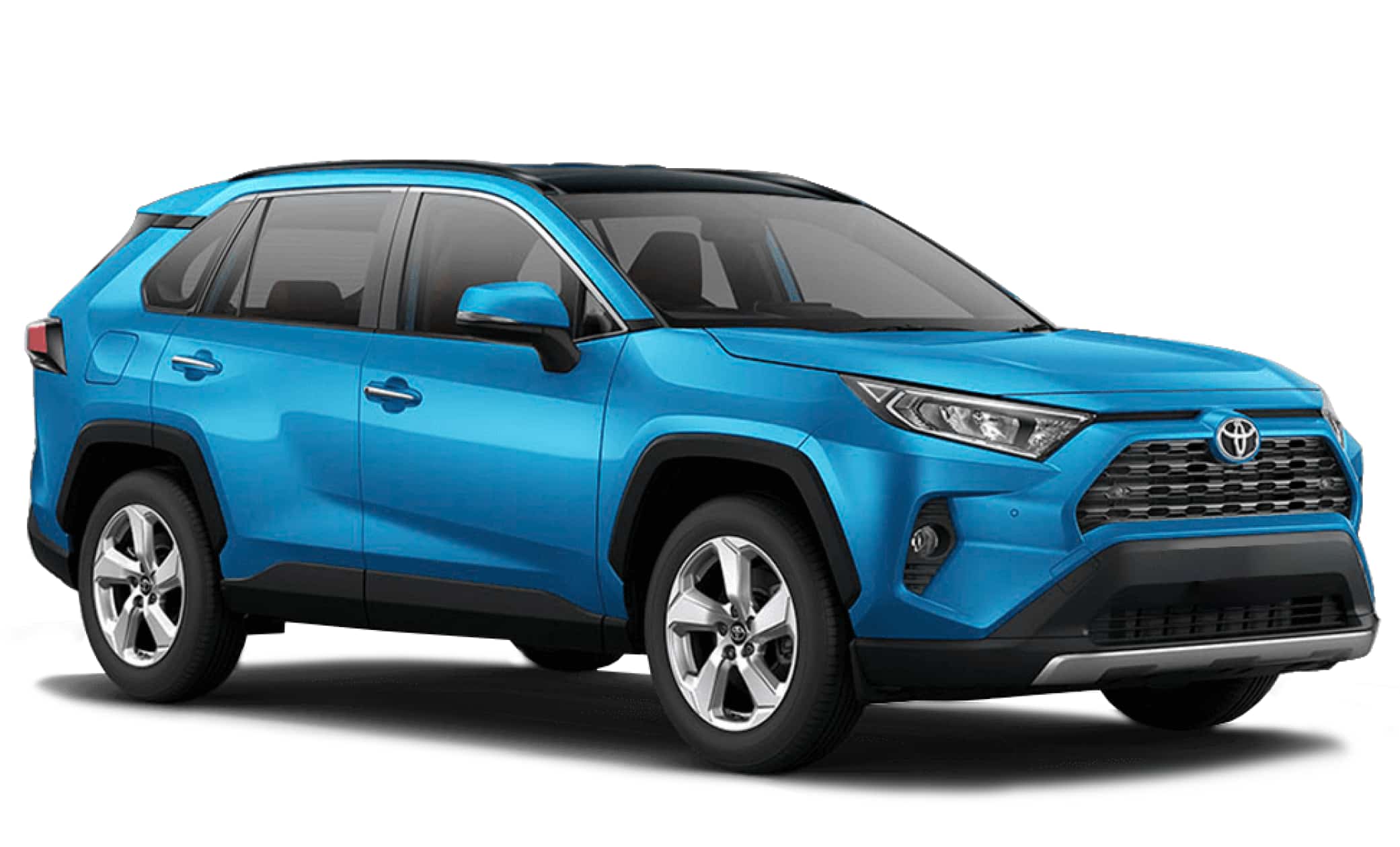
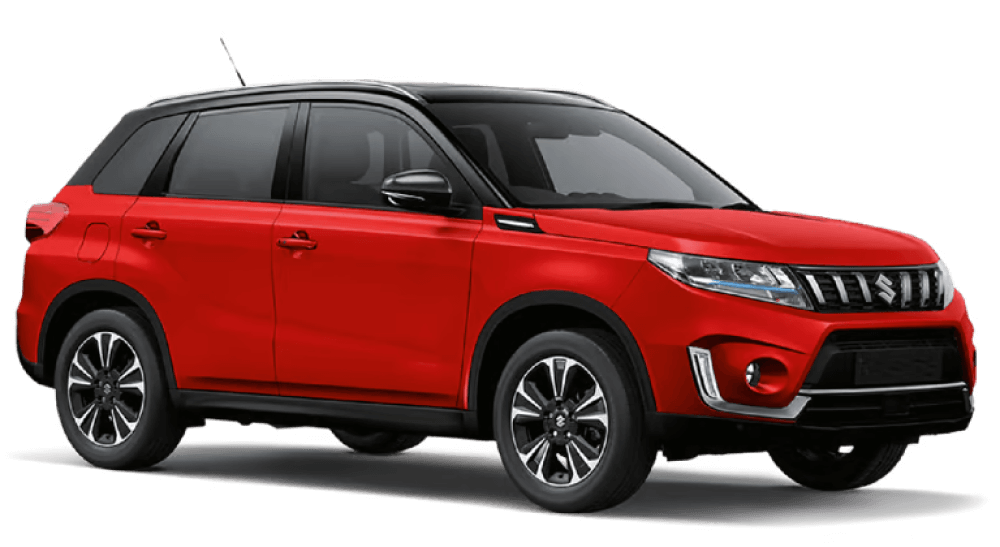
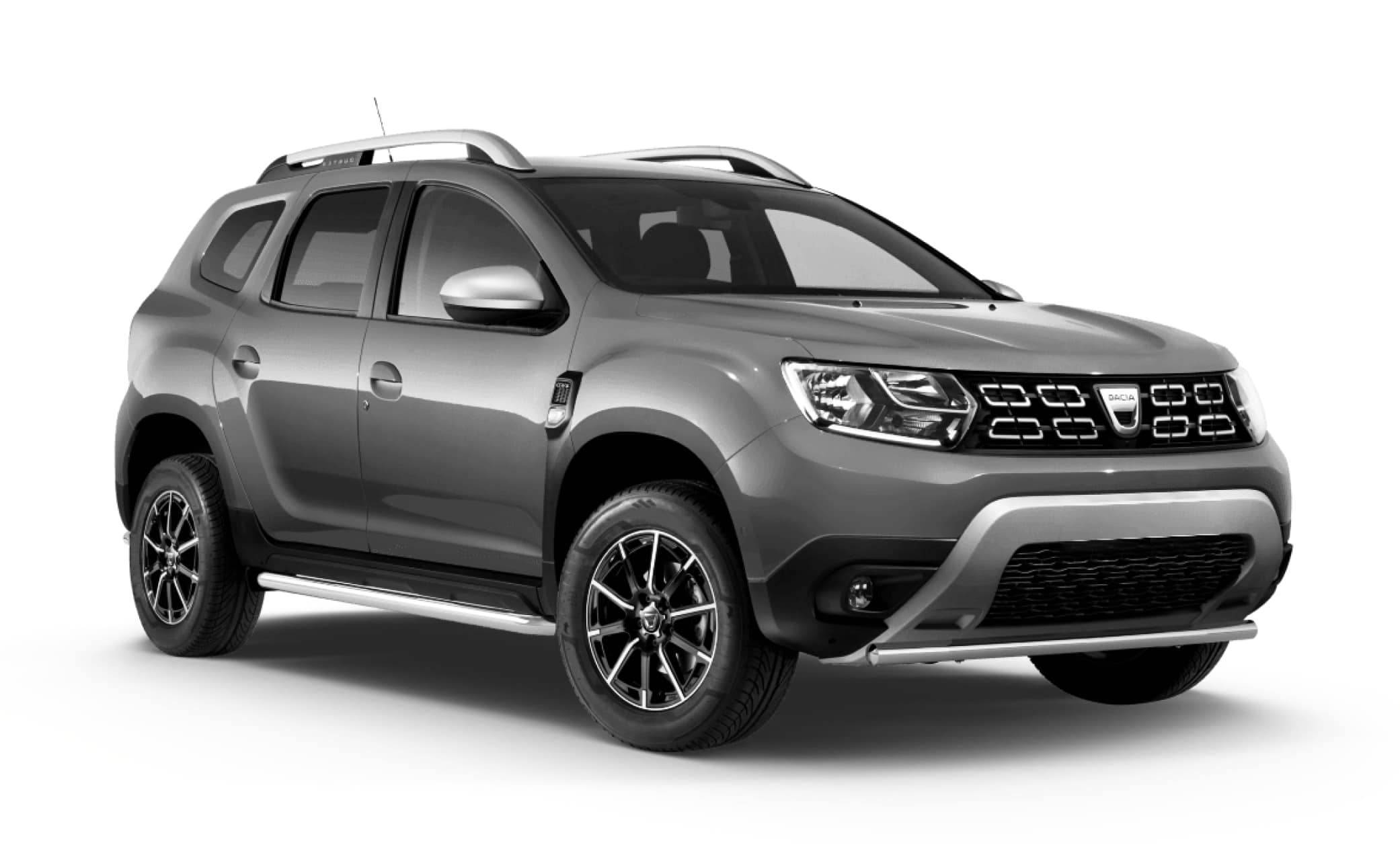
Driving in Iceland in January means going with a 4x4. Anything less is asking for trouble. These vehicles grip better, climb packed snow at slopes up to 15 percent, and hold steady where 2WDs start sliding.
A basic 2WD might get you around Reykjavík or down a paved road to the Blue Lagoon, but that’s about it. Stay under 50 km (31 miles) a day, hope for dry weather, and you might get away with it.
Most Cars Iceland renters don’t take that gamble. They book 4x4s and move through drifts, gusts, and icy hills without any trouble.
Features You Should Look For (heated seats, winter tires, etc.)
Cars Iceland equips every winter rental with the features that actually matter. Studded or deep-tread winter tires come standard and hold traction on icy surfaces even at 80 km/h (50 mph).
Heated seats and mirrors kick in fast, clearing frost and keeping the cabin warm during those short daylight windows. Higher ground clearance, around 20 cm (8 inches) on our 4x4 models, helps clear snow berms up to 15 cm (6 inches) high on plowed routes like the Ring Road.
Fuel Type and Efficiency in Cold Weather
Diesel performs better in Iceland’s winter. It starts reliably in temperatures as low as -25°C (-13°F) while some petrol blends struggle. Cold weather also increases fuel consumption by 20 to 30 percent.
Most vehicles average 10 to 12 L per 100 km, or about 20 to 23 miles per gallon. Expect more if you’re driving a heavy 4x4, running the heater nonstop, or pushing into strong headwinds.
Cars Iceland recommends keeping your tank above half at all times. Some rural stations, especially east of Vík, are over 200 km (124 miles) apart and may close without notice during storms.
Must-Know Driving Tips for January in Iceland
Winter driving in Iceland takes more than a good car. Here’s what we actually tell people before they leave the lot.
Check umferdin.is and vedur.is before every trip
At Cars Iceland, we tell every winter renter the same thing. Check the conditions before you drive. Umferdin.is gives live road status including closures, plowing, and surface conditions. Vedur.is shows wind, snow, and storm warnings across the country. Both update constantly and reflect changes that happen overnight. A road that looked fine yesterday might be blocked by morning. These tools are simple to use and accurate. Use them before every trip, even for short drives. This is what we locals even rely on.
Keep emergency supplies in the car
Winter driving in Iceland means preparing for delays. Cars Iceland recommends keeping a full emergency kit in the vehicle, not just hoping for the best. Bring warm layers like wool thermals, fleece, and a waterproof shell.
Pack high-calorie snacks, chocolate, and at least 2 liters (0.5 gallons) of water per person. Include a car charger and a backup power bank with at least 10,000 mAh. In remote areas like the East Fjords, traffic is light and response times vary.
Some stretches go 300 km (186 miles) without a town. If you get stuck, these supplies keep you warm, fed, and reachable.
Use headlights all the time, drive slower, increase distance
Headlights are not optional in Iceland. Our law requires them to always be on, even in broad daylight. Visibility drops fast in fog or snow, and other drivers expect to see you lit up. Ice changes everything.
At 50 km/h (31 mph), stopping distance on ice stretches to 100 meters (328 feet), compared to just 30 meters (98 feet) on dry roads. Panic braking spins cars off course. At Cars Iceland, we tell drivers to slow down, hold momentum, and leave proper space.
Keep at least 100 meters (328 feet) between you and the next vehicle. Cap speeds in snow. Don’t rush. For more on technique, speed limits, and signs, check our guides on:
Recommended Routes for Winter Road Trips
If you want to enjoy the drive and not fight the conditions, route choice matters. Below are the winter routes we know work, and the ones we don’t recommend.
Golden Circle
The Golden Circle is the most reliable route for driving in Iceland in January. Roads like Route 1 and 360 are paved, well-marked, and cleared regularly, even during storms. The loop starts from Reykjavík and stays open thanks to constant plowing and salting.
Short distances make it perfect for limited daylight. With 5 to 7 hours of usable light, you can head to Thingvellir around 10 AM, catch Strokkur erupting at Geysir by midday, and reach Gullfoss before the 3 PM fadeout. This route suits 4x4 rentals well, with safe pull-offs and easy pacing. Cars Iceland recommends this loop to winter drivers for its safety, simplicity, and geothermal extras like the Secret Lagoon.
Fewer tourists in January mean quieter views and higher chances of seeing the northern lights. Need a break? Stop in Hveragerði for coffee and warmth before looping back to the city.
South Coast (Vík, Skógafoss, Jökulsárlón)
The South Coast route to Vík, Skógafoss, and Jökulsárlón covers about 380 km (236 miles) round trip from Reykjavík. Driving in Iceland in January along this stretch is possible, but it fully depends on the weather. Route 1 is paved and maintained, yet storms can shut down sections east of Vík without notice.
Reaching Skógafoss by midday and Vík shortly after is realistic on a clear day. Beyond that, conditions shift fast. The stretch to Jökulsárlón sits 190 km (118 miles) farther and is prone to whiteouts. We recommend keeping your plans flexible.
Many people end up staying overnight in Vík or Höfn when the forecast turns. Always check vedur.is before setting off, and bring fuel and food in case you're delayed. This route offers incredible winter scenery, but only if you respect its limits.
Snæfellsnes Peninsula
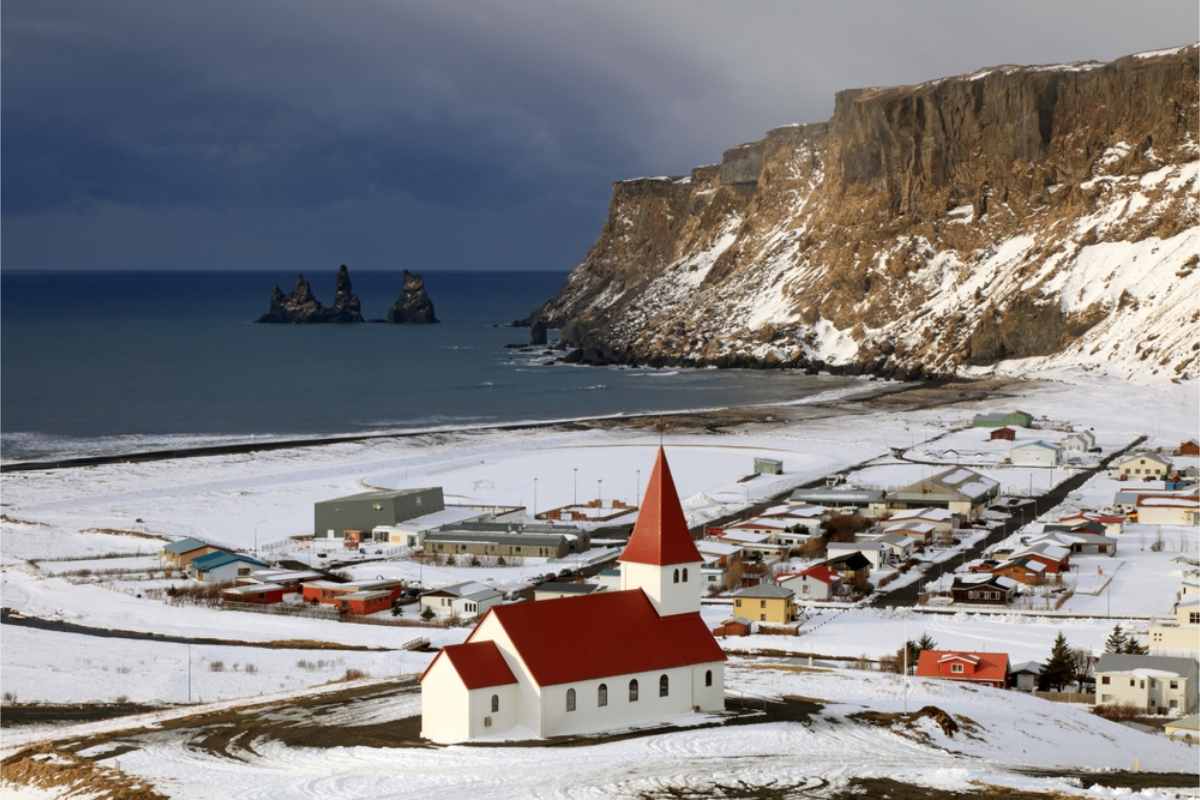
The Snæfellsnes Peninsula loop runs about 350 km (217 miles) from Reykjavík and is drivable in January if the forecast holds. Route 54 is paved and cleared regularly, but it is exposed in sections.
Wind gusts over 100 km/h (62 mph) are common between Ólafsvík and Hellnar, often pushing vehicles off track. This route is best tackled with a 4x4 from Cars Iceland. The extra clearance handles snow up to 10 cm (4 inches) deep, and the added grip keeps you steady across open moors.
Start after 10 AM when visibility improves and plan to return before the 3 PM sunset. Sites like Kirkjufell, Djúpalónssandur, and the glacier views are worth the trip, but only if road conditions allow. Check umferdin.is before setting out, and skip it if wind alerts are active.
Areas to avoid due to road closures
The Icelandic highlands are fully closed in January. F-roads and interior tracks to places like Landmannalaugar or Askja are buried under deep snow and won’t reopen until June. Remote roads in the East and West Fjords also become unreliable.
Routes like 82 to Seyðisfjörður or Route 60 across the Westfjords are narrow, avalanche-prone, and often blocked for days after storms. Even when listed as open, conditions can be unsafe. Icy patches, wind gusts, and minimal traffic increase the risk of getting stranded.
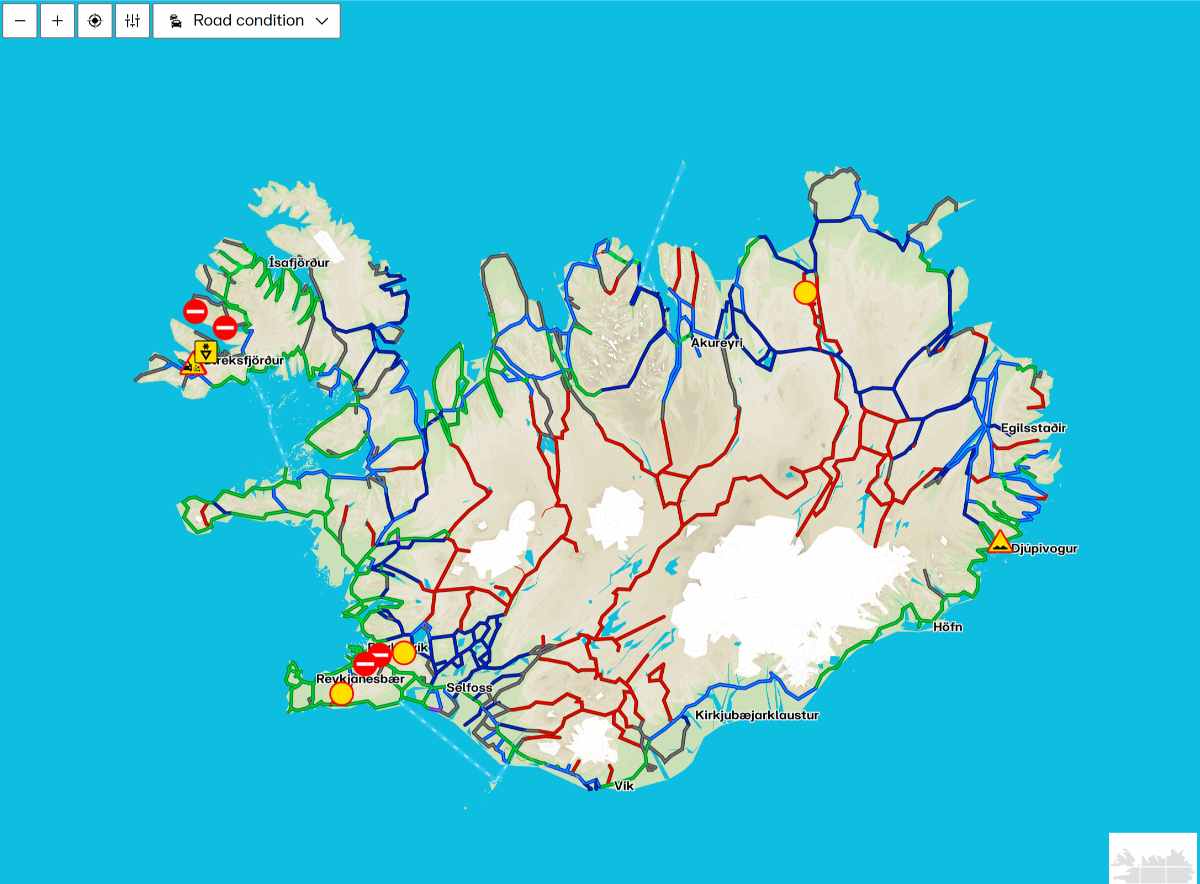
Rescue may take hours. Cars Iceland strongly recommends sticking to the main Ring Road and other well-maintained routes that are marked as green (good conditions) or blue (icy) during winter. There’s no reward in pushing into areas that locals avoid this time of year (grey areas where conditions are unknown). Red is usually impassable so simply forget about those.
Tools and Resources to Plan Your Drive
The right tools make the difference between a smooth drive and a bad decision. Here’s what to check and when to check it before setting out.
112 App for Safety Alerts
The 112 Iceland app connects you to emergency services and sends alerts for storms, avalanches, and road closures. It tracks your location and logs your travel route for rescue if needed. Works offline.
Turn it on before driving. Leave it running. If you get stuck in a whiteout, this is what speeds up the rescue. Locals in rural areas use it every time they drive a long distance. No reason you shouldn’t do the same.
Essential Pre-Drive Checklist
Even with the right car and route, small details matter. Here’s what we recommend checking before you start the engine.
Winter tires (mandatory)
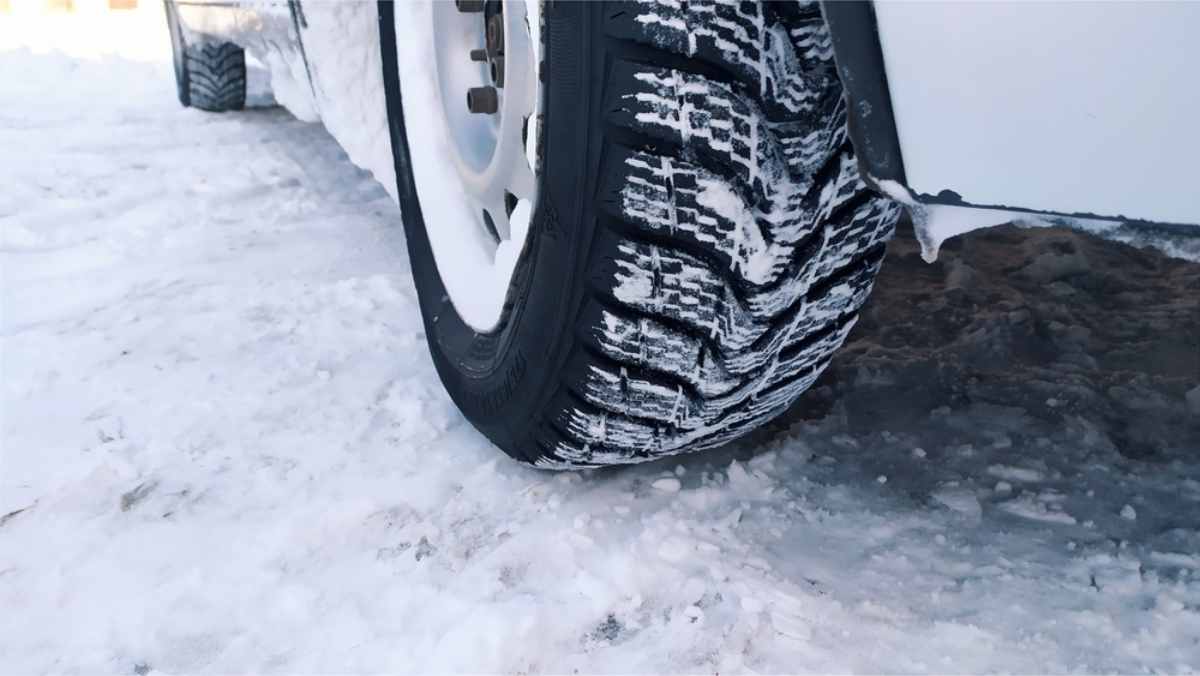
Winter tires are not optional in Iceland. They are legally required from November through mid-April, and for good reason. Roads ice over fast, and without proper grip, you’re not going anywhere. At Cars Iceland, every winter rental comes fitted with studded or deep-tread winter tires.
When you rent with us, there’s no extra cost for it either. Just the standard setup you actually need. Some companies try to upsell winter tires as an add-on. That’s a BIG red flag. We don’t play that game. For full details, check our guide to snow tires in Iceland before booking.
Insurance and coverage options
Every Cars Iceland rental includes the essential coverage you actually need. That means Collision Damage Waiver, Theft Protection, Third-Party Liability, and Personal Accident Insurance. It’s built into the price.
Winter conditions, though, add risk. Gravel, wind, and ice can do damage fast, especially on long trips. That’s why many of our happy customers add extras like Sand and Ash Protection or full coverage to avoid large deductibles.
We make those options clear at checkout so you know exactly what’s covered. For a full breakdown, read our Iceland car rental insurance guide before you book.
Emergency kit and warm clothes
Layering keeps you in the game when the weather turns. Start with wool against your skin, add fleece for insulation, and finish with a waterproof shell that holds up to wind at 100 km/h (62 mph).
Cover every exposed area if temperatures drop below -10°C (14°F). That means a hat, gloves, and something over your face. Backup heat matters too. Pack chemical hand warmers that last 12 hours, a mylar blanket that traps body heat, and dry socks for when the snow soaks through.
This isn’t overkill. Cars get stranded for 24 hours in places like the East Fjords. If you're not prepared, you're in real trouble.
Download maps for offline navigation
The signal can drop fast once you leave the towns. On stretches past Vík or through the East Fjords, you can go 50 to 100 km (31 to 62 miles) with nothing. And when storms hit, even the good spots go dark.
Offline maps aren’t optional out here. Download everything before the trip. Google Maps or Maps.me both work. Get full routes for the Ring Road, Golden Circle, and any side trips. Turn-by-turn, it still works without a signal if it’s saved in advance.
FAQs About Driving in Iceland in January
Do I really need a 4x4
Yes. Unless you're staying in Reykjavík and driving short distances, a 4x4 is strongly recommended. Most of our clients choose a 4x4 for a reason.
Can I drive the Ring Road?
Yes, but only if the forecast is clear and you’re flexible. Sections can close without warning. Always check umferdin.is and vedur.is before leaving and have backup plans.
What happens if a road is closed?
You stop. Driving past a closure is illegal and voids insurance. Cars Iceland does not cover recovery or damage if you ignore warnings or roadblocks.
What’s the speed limit in icy conditions?
Official limits stay the same, but that doesn’t mean you drive them. In snow or ice, most drivers stay around 50 to 70 km/h (31 to 43 mph). Drive for the surface, not the sign.
Can I use my license in Iceland?
Yes, as long as it’s in Latin characters. For more details, check our full guide to driving license rules in Iceland.